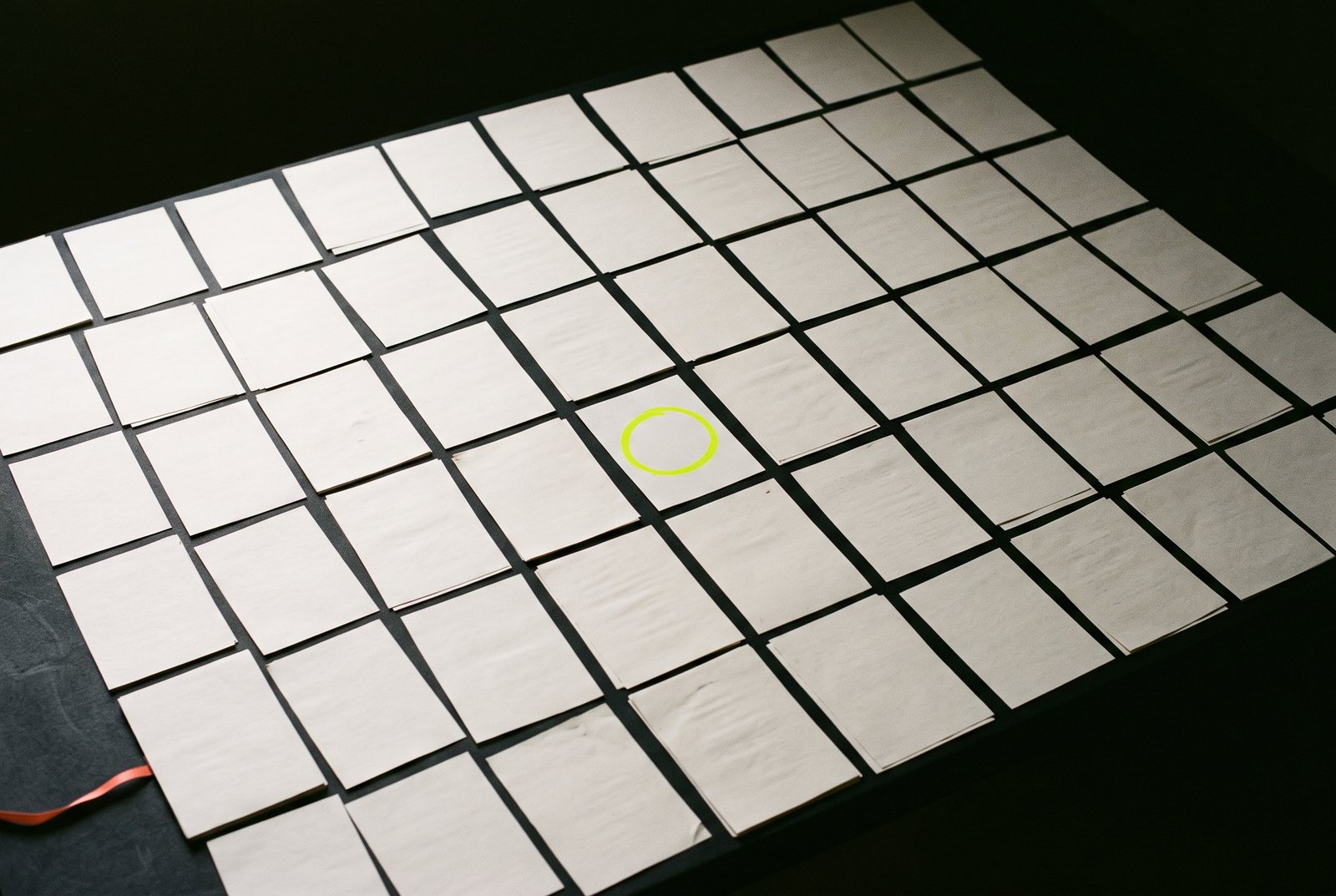
When anyone can produce the work by Friday, the scarce thing is knowing which work was worth producing at all.
For most of my working life, the bottleneck in marketing was production. You had an idea on Monday and, if the team was quick and nobody went on leave, something finished by Friday. Agencies sold that gap. Headcount defended it. Quarterly plans were shaped less by what was worth doing than by what the team could physically get out of the door.
That bottleneck is mostly gone. A competent marketer with the current tools can produce a landing page, fifteen ad variants, a product explainer and a month of social posts in a day. Not brilliant versions. Competent ones. Good enough to ship, which is the level most marketing was operating at anyway.
Everyone noticed the speed. Fewer people noticed what the speed did to the value of judgement.
Being wrong got more expensive, not less
The intuitive read is that cheap production makes mistakes cheap. Try everything, keep what works. That is true of the production cost and false of everything else.
When you could make four things a quarter, a bad idea cost you a quarter of production time. When you can make forty things a week, a bad idea costs you something that does not refill on a schedule: the attention of the people you are trying to reach. Your audience does not keep a separate inbox for your experiments. Every weak piece you ship is spent from the same account as the good ones, and that account is only topped up by being worth opening.
So the question stopped being “can we make this” and became “is this the one worth making.” That question has never been answerable by a tool, because it is not a production question.
Taste is not decoration
Taste gets talked about as if it were an aesthetic preference, a matter of liking serif fonts or muted palettes. In marketing it is something more boring and more useful: the ability to predict, before you spend anything, which version will land on a real person.
Broken into parts, it is three habits.
Knowing the real objection. Not the one in the persona document. The one the customer says out loud on the third call, usually some version of “I believe you, I just do not want to be the person who has to explain this internally if it goes wrong.” Copy that answers the stated objection is fine. Copy that answers the real one converts.
Knowing which detail carries the claim. Every piece of work has one detail doing the persuading and a dozen along for the ride. A specific number. A named limitation. The one photograph that shows the thing actually in use. Most revisions polish the passengers and leave the driver untouched.
Knowing what to cut. The rarest one, because cutting is the only edit that cannot be defended with effort. Nobody has ever been praised in a review for the paragraph they deleted.
The new default failure is sameness
When everyone works with tools trained on roughly the same material, the average output converges. Not badly. That is the problem. It converges on competent, and competent is invisible.
I wrote a while ago that consistency is not the same as sameness, and this is where that distinction stops being academic. A brand that is merely consistent now looks like every other consistent brand in its category, because they are all being kept consistent by similar systems. Whatever separates them has to come from a judgement someone made, and was willing to be wrong about.
The same logic applies to the thing most teams still misread about their competition. The real problem was never the rival with the better ad. It is the customer who does nothing at all, and doing nothing has only got easier as the volume of competent marketing has gone up.
Where taste actually comes from
Here is the part I find genuinely encouraging. Taste is not a gift and it is not seniority. It is accumulated feedback. It comes from having shipped something, watched it fail, and been close enough to the failure to understand which specific decision caused it.
Which means the people who build it fastest are not the ones with the best tools. They are the ones who stay closest to the result. Ship and never look, and you can do that for ten years and end up with ten years of the same judgement. Ship, watch, and write down what you now believe, and you move quickly.
The uncomfortable version: the expensive part now is not the making. It is the deciding. And deciding is the part most teams had quietly outsourced to whatever the production schedule allowed.
The teams that look good in two years will not be the ones who adopted the tools first. Everyone adopted the tools. They will be the ones who spent the time the tools gave back getting closer to their customers, not further away.