Burger King baits McDonald’s. Audi baits BMW. None of it is an accident, and none of it is really about the product.
Every few years, two brands get into a public fight and the internet loves it more than either product. Wendy’s roasts a competitor on X and gets more engagement than a month of scheduled posts. It looks spontaneous. It almost never is.
Reactive marketing, jumping on a competitor’s move, a cultural moment, or even another brand’s mistake, and turning it into your own ad in near real time, works because it borrows attention that already exists instead of trying to manufacture it from scratch. That is the whole trick, and it is worth taking apart properly instead of just enjoying it as entertainment.
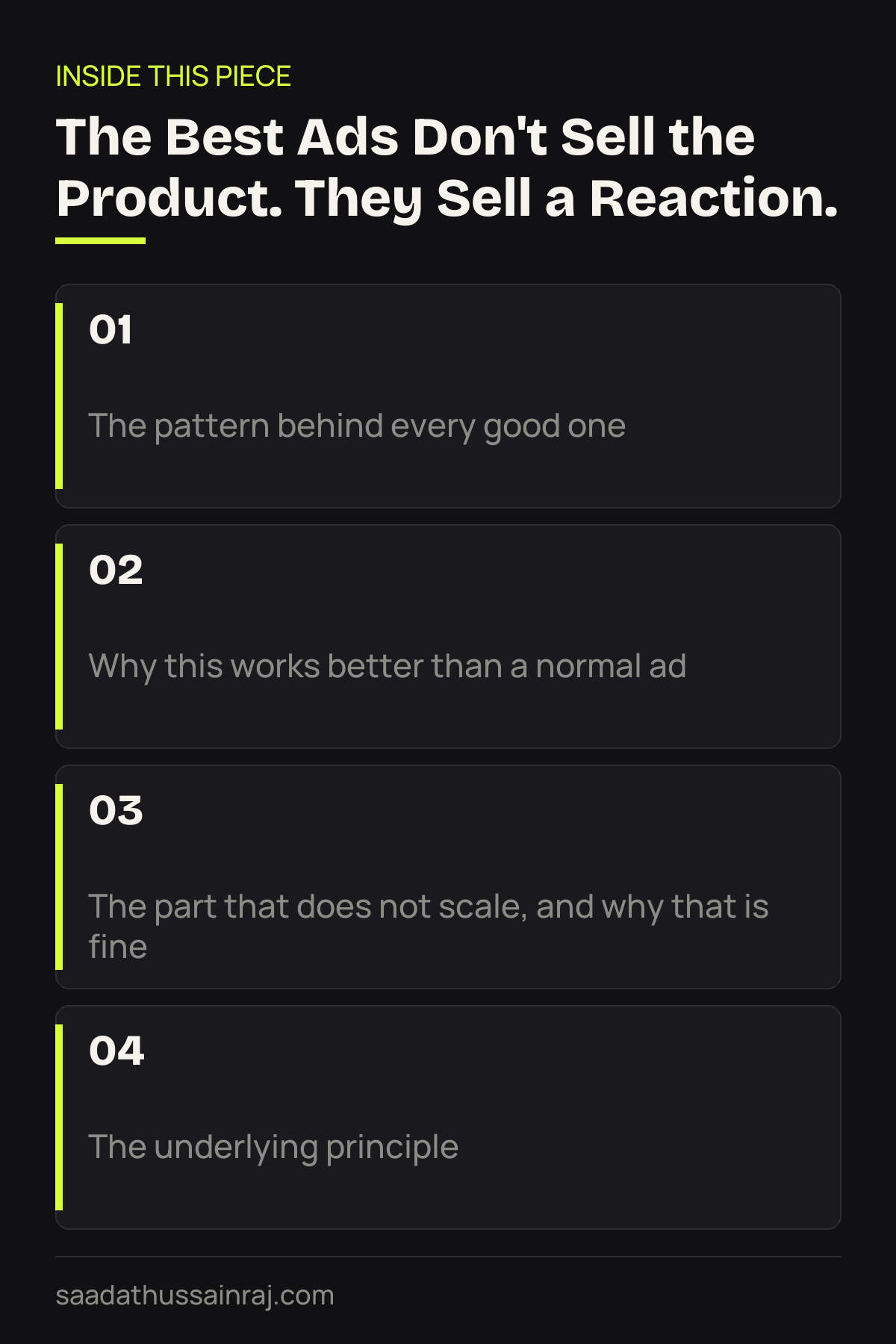
The pattern behind every good one
Look closely at the campaigns people actually remember, and the same shape shows up every time.
There is a real moment, not a manufactured one. The best reactive ads respond to something that actually happened: a competitor’s product launch, a cultural event, even an own-goal from another brand. The internet can tell the difference between a genuine reaction and a brand pretending something happened so they would have an excuse to post. The fake version reads as thirsty. The real version reads as sharp.
The response is faster than the brand should reasonably be able to move. Part of what makes these campaigns land is the implied competence behind the speed. A billboard that goes up within hours of a competitor’s stumble tells you something about the team behind it, that they are paying attention and can execute without six layers of approval. That is a brand-strength signal in itself, separate from whatever the ad actually says.
It is confident, not defensive. The losing version of reactive marketing punches down or sounds bitter. The winning version is playful, self-assured, and willing to make itself the joke half the time. Confidence reads as strength. Defensiveness reads as weakness, even when the underlying point is correct.
The product barely appears. This is the part people miss when they try to copy the format. The ad is not demonstrating a feature. It is demonstrating a personality, and personality is what actually differentiates two products that are, on a spec sheet, nearly identical.
Why this works better than a normal ad
A standard ad has to do two jobs at once: earn attention and make a sales case. That is a lot to ask of fifteen seconds or a single image, and most ads end up doing neither job particularly well because they are splitting effort.
A reactive ad only has to do the first job. It rides attention that has already been paid for, by the news cycle, by the competitor’s own campaign, by whatever cultural moment it is responding to, and spends its entire budget of goodwill on being memorable instead of being persuasive. The sales case gets made later, by the brand affection the moment created.
The part that does not scale, and why that is fine
Here is the honest caveat: you cannot build a content calendar around waiting for the perfect moment. Reactive marketing is, by definition, opportunistic. A brand that tries to force a reactive moment every single week ends up looking desperate rather than sharp, because the audience can tell when a spontaneous reaction was clearly planned three weeks in advance.
The brands that do this well treat it as a standing capability, not a campaign type. They keep the creative team, the approval chain, and the publishing muscle ready to move fast, and then they wait. Most weeks, nothing happens and they run their normal calendar. Then something does happen, and because the muscle was already built, they are first.
That is the actual takeaway. Not “jump on trends,” but “build the organizational speed so that when a real moment shows up, you can actually take it.” The idea is the easy part. The infrastructure to execute it in hours instead of weeks is the hard part, and it is the part that separates the brands people remember from the brands that tried the same trick a week too late and got ignored.
The underlying principle
Strip away the wit and the timing, and what is left is a simple idea: attention is the scarce resource, not creativity. A brand that can find and borrow attention that already exists, honestly and quickly, will usually beat a brand spending the same budget trying to manufacture attention from nothing. The product still has to be good. But the ad’s job was never really to prove that. Its job was to make you look, and then to make you like what you saw.